|
FUNGAL Infections/Infestations |
|
|
|
Definitions
Understanding |
|
|
Blasto-mycosis fungus -
Canada (ON) - Blastomycosis:
fatal
rarity -
http://dgalerts.docguide.com/canada-blastomycosis-fatal
-
1/23/2015 |
|
|
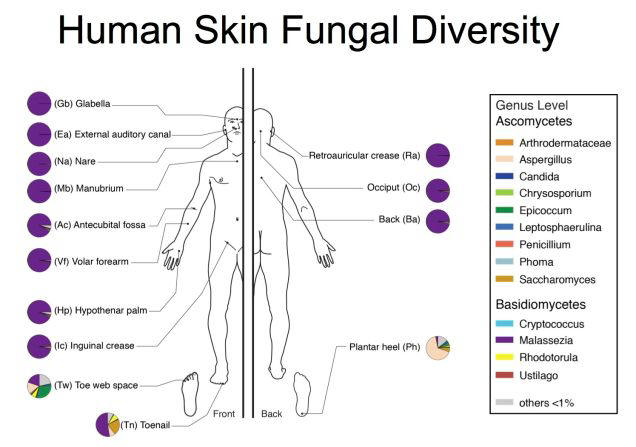
Human Skin Fungal Diversity
http://io9.com/meet-the-fungi-growing-all-over-your-body-509212796 -
published in
Nature.
 |
|
|
"FUNGAL INFECTIONS -
Fungi appear microscopically as rounded, budding forms (yeastlike
organisms) or hyphae (molds).
Yeastlike
colonies appear as smooth colonies, while mold is a fuzzy fungus
that
grows as yeast.
Yeast includes species of
Candida &
Cryptococcus.
Fungi that grow as mold include
Aspergillus &
Rhizopus species, & dermatophytes (ringworm).
Pathogenic fungi in humans are saprophytes that cause infection when
airborne spores invade tissue of lungs or paranasal sinus, or when hyphae or spores are inadvertently
inoculated into skin or cornea.
Infection from another person or
animals has been reported for ringworm but is extremely rare with other
mycoses. Hospitalized patients with
fungal infections
thus do not
usually require special isolation.
Ingestion of fungi rarely causes
infection.
Candida albicans, a normal inhabitant of the mouth & intestine,
rarely reaches deeper tissues, but
infection can occur when mucosal or cutaneous barriers are damaged by disease, surgery, trauma, or
catheterization.17
Exposure to fungi may impart partial protection against reinfection.
People living in areas where mycoses are endemic & less subject to infection than newcomers into the area.
Immunoglobulin deficiencies do not
appear to predispose to any fungus,
whereas neutropenia is common among patients who develop
deep-seated candidiasis. Cell-mediated immunity is of paramount importance in most
other deep mycoses.17
Candida albicans
is the
most common cause of mucosal candidiasis, being responsible for about half
of all
cases of candidal infections in hospitalized patients.
Candidiasis
is a general term that describes a number
of clinical syndromes caused by
Candida.18
Candida
species, taken together,
constitute 5th leading
cause of nosocomial (ie, hospital or
institutionally acquired) blood infections in the United States.19
Candidiasis is often preceded by
increased colonization due to broad-spectrum antibiotic therapy.
Oropharyngeal
thrush is especially
prone to occur in neonates &
individuals with diabetes mellitus or HIV
infection. It is common in
persons with poorly fitting dentures.18
Vulvovaginal
candidiasis is esp.
common in 3rd trimester of pregnancy.
Candida can enter the urinary tract through an indwelling
bladder
catheter. Cutaneous candidiasis usually involves macerated skin, as
that in diapered area of infants.
Candida
can pass from colonized surface
into deep tissue when integrity of mucosa or
skin is violated, as, by perforation of gastrointestinal
tract through trauma, surgery, peptic ulceration, or by mucosal damage due
to cytotoxic drug therapy used for treating cancer.
Although
Candida
is not normally a resident of skin, secretions from mouth, rectum,
or vagina,
as well as drainage from surgical wounds or tracheostomy sites,
can contaminate hub or skin site of
catheter in umbilical or
central vein. Intravenous drug abuse or 3rd-degree burns are other
conditions that can lead to deep candidiasis.19
Esophageal Candidiasis -
1 of the most common deep-seated
Candida infections,
esophageal candidiasis, is often asymptomatic,
although it can cause substernal pain or a sense of obstruction on swallowing.18,20
The infection is often
associated with significant morbidity but is seldom
fatal.20
Most lesions occur in distal 3rd of esophagus,
appearing on endoscopy as areas of redness & edema, focal
white patches, or ulcers.
Esophagography (barium swallow) is diagnostically insensitive but
may reveal spasm or mucosal irregularities.
Esophageal candidiasis can
cause bleeding & impaired
gastrointestinal function.
Hematogenous dissemination from esophagus
probably occurs in some neutropenic patients
but is rare in HIV-infected
individuals.19
Invasive Fungal Infections in
Hematopoietic Stem Cell Transplantation -
Invasive fungal infections now constitute 1 important
cause of morbidity & mortality in
hematopoietic stem cell
transplantation recipients.21-23
Autograft recipients may
develop invasive fungal infections due to neutropenia, but allogeneic
hematopoietic stem cell transplantation recipients are at great risk due
to graft-versus-host disease & its treatment, & the delay in immune
reconstitution.24
Depending on risk factors (Table 4),
incidence of invasive fungal infections in hematopoietic stem cell
transplantation recipients ranges between 14%-25%.22,25
C albicans &
Aspergillus species account
for the majority of
cases.24"
BEWARE OF THE FUNGUS "
Ergot
(drug)
derivatives =
Dihydroergotamine,
ergonovine,
ergotamine,
methylergonovine" may cause psychosis & death ("acute
ergot toxicity characterized by peripheral vasospasm & ischemia of
extremities & other tissues"). (edited) @
http://www.thecesolution.com/
ce/lessons/TCES_NewDrugs_1stHalf_2005_100105/NewDrugs_1stHalf_2005_100105.htm
|
|
|
|
candida_albicans_or_candidiasis.htm |
|
Candida
auris @
https://www.wnycstudios.org/podcasts/radiolab/articles/fungus-amungus
+
Further Fungus Reading:
NYTimes feature on
the mysterious rise of Candida
auris.
Arturo's paper
“Emergence of Candida
auris, Climate
Change, Azoles, Swamps & Birds”, by Arturo Casadevall
“On the Origins of a Species: What Might Explain the Rise of Candida
auris?”,
a report
from the CDC.
|
|
Candida Spores @
Candida Yeast Infection Relief & Treatment | Candida Yeast Infection
(candida-yeast-infection-relief.com) - Certain
herbs/vitamins/minerals/suppliments taken for at least a year may help to
kill fungus SPORES, the root issue of candida due to "vibrational
frequencies gradually deactivate and destroy Candida spores throughout the
body". |
|
|
Histoplasmosis
-
https://www.britannica.com/science/histoplasmosis
-
"Histoplasmosis,
infection with the
fungus
Histoplasma
capsulatum,
occurring in humans and other animals.
The
disease
is contracted by the inhalation of dust containing
spores of the fungus.
H. capsulatum
prefers moist, shady conditions and is found in woods, caves, cellars,
silos & old chicken houses (& factory farmed
chicken manure used as fertilizer).
The last seem to be especially important because
chickens
often are infected & pass enormous numbers of organisms in their
droppings.
Use of chicken manure in gardens may lead to histoplasmosis
in humans.
Dogs, rats, mice, bats, pigeons, skunks.
Probably many other
animals become infected & may help to spread the disease.
The chief site
of infection is the lungs, though the fungus can spread through the
bloodstream to other organs, such as the liver, &
bone marrow...patients
with widespread disease can be treated with the antibiotic
amphotericin B.." |
|
|
|
Mycetoma -
https://www.npr.org/sections/goatsandsoda/2015/12/28/461171017/a-disease-so-neglected-its-not-even-on-most-neglected-lists
@
https://www.npr.org/tags/144313109/fungus RADIO |
|
|
Onychomycosis is a (toe nail) fungal infection usually caused by a
special type of fungus known as a dermatophyte.
These sorts of fungi
are generally confined to the dead, horny outer layers of the skin &
gradually progress to involve the nail plate.
(Consistent diluted tree tree oil/cream toe nail treatment may help.
A newer laser therapy may also work, after repeated treatment.
Consider antiparasite liquid drops on sock toes.) |
|
|
|
Ringworm is a fungus NOT a worm.
http://www.medicinenet.com/ringworm_pictures_slideshow/article.htm
|
Ringworm & Candida: What's the
Difference?
http://www.webmd.com/skin-problems-and-treatments/features/ringworm-or-candida
-
"Both types of
infection are fungal,
says Linda Stein Gold, MD,
director of dermatology at Henry
Ford Hospital in Detroit. At
their root are fungi, not the
bacteria or viruses that cause
other infections.
Technically speaking, "ringworm
is a dermatophyte," says
Weinberg.
A dermatophyte is
simply a type of fungi that can
cause skin, hair, or nail
infections.
'Candida is a
yeast,' says Weinberg. These
fungi can cause infections on
many areas of the body...
Yeast infections, commonly
caused by a group of fungi from
the species Candida -
Women
with a vaginal yeast infection
often report a white, cheesy
discharge.
In the mouth, the
infection shows up as thick,
white lacy patches on the
tongue.
On the skin, the
infections are often a red, flat
rash with scalloped edges.
There
are 'satellite' lesions nearby,
Weinberg says.
There can be
pustules. Men can be affected
with yeast infections in the
scrotum, Weinberg says.
This
infection often shows up as
bumps...Often the same topical
medicine will work for ringworm
& yeast."
(Caution: Fungus
can be highly infectious & cross contamination can
occur in oneself or to
family/team.)
|
|
|
|
Sporotrichosis is a fungal (skin) infection
(often of thumb/finger/hand) caused by a fungus called
Sporothrix
schenckii. Individuals handling thorny plants, sphagnum moss,
or baled hay are at increased risk of acquiring sporotrichosis. |
|
|
Tanalbit supplement (plant tannins + zinc) @
Tanalbit by Intensive Nutrition (apple-a-day-clinic.com)
CAUTION:
May contain CASEIN for those allergic to it. |
|
Thrush -
"The
Memorial Sloan Kettering Cancer Center, study results suggest that
lemongrass may have some infection-preventing
capabilities. For example, the herb seems to reduce the incidence of
thrush, a fungal infection that commonly affects people
with weakened immune systems, such as
those with
HIV. @
https://www.medicalnewstoday.com/articles/321969.php
|
|
Toenail fungus
can be a symptom of candida @
http://www.candidasupport.org/the-symptoms-of-candida/mens-candida-symptoms/
|
|
|
|
Alternative Medicine |
|
|
Antifungal Effect
in Natural Compounds in the Treatment of Vulvovaginitis -http://www.ncbi.nlm.nih.gov/pubmed/16180802 -
Ceska Gynekol. - 9/7/2005 - One
can treat
vaginal candidoses
with a diet of probiotics & natural foods (garlic, Chinese leeks,
Cayenne pepper,
Clove, Propolis, Tea
tea oil, vitamin E, zinc & fermented foods. |
|
|
|
Avocado SEED @
https://www.healthline.com/nutrition/eating-avocado-seed - 6/25/2018
-
"Antibacterial: 1
test-tube study found that it stopped the growth of Clostridium
sporogenes, a spore-forming bacteria (12Trusted
Source).
Antifungal: Avocado seed has inhibited
fungal growth in test-tube studies.
In particular, it can
inhibit Candida
albicans, a yeast that often causes problems in the gut (13Trusted
Source, 14Trusted
Source).
CAUTION:
https://www.livestrong.com/article/31737-eat-avocado-seeds-nutrition/
8/14/2019
|
|
|
Baker's Yeast @
https://www.sciencedaily.com/releases/2011/08/110809212430.htm
- "Injecting
mice with simple baker's yeast protects against the fatal fungal
infection, aspergillosis, according to new research.
The work
could lead to the development of a human vaccine that protects
immuno-compromised people against a range of life-threatening fungal
infections, for which current therapy often fails. (Bakers yeast may also
protect against)
3 other fungi that cause human disease:
Candida, Cryptococcus & Coccidioides."
(Preferably use Nutritional yeast.) |
Barley seeds (sprouted) -
http://journals.cambridge.org/action/displayAbstract?fromPage=online&aid=704360
-
"The 1st
plant chitinase for which a 3D
structure was solved had been isolated from
barley seeds.
Moreover, the finding that a chitinase could rescue a somatic embryo
mutant was the 1st evidence of a non-defensive function.
Several lines
of evidence have substantiated the biotechnological potential of
chitinases to counter plant fungal
disease." |
|
Bananas, chestnuts, kiwis, avocados, papaya, & tomatoes, for example, all contain significant levels of
chitinase.
http://en.wikipedia.org/wiki/Chitinase
|
Barberry (Berberis vulgaris) +
goldenseal
(hydrastis canadensis) tinctures -
Use alternately for MRSA. 5/2017
excellent
https://www.wddty.com/magazine/2017/march/natural-born-superbug-killers-1.html
-
Berberine has long shown selective antimicrobial activity against a wide
range of bacteria, fungi &
protozoa, including:
Chlamydia spp, Corynebacterium diphtheriae
Escherichia coli
Klebsiella spp
Neisseria gonorrhoeae, Neisseria meningitidis
(meningococcus)
Pseudomonas spp
Salmonella typhimurium, Shigella dysenteriae, Staphylococcus species (spp),
Streptococcus spp, Streptococcus pneumoniae
(pneumococcus)
Treponema pallidum, Trichomonas vaginalis
Vibrio cholerae |
|
Beets and berries @
https://mynutritionadvisor.com/beets-kill-fungi/
|
Beta-Glucans -
http://www.lef.org/magazine/mag2009/dec2009_The-Immune-Enhancing-Benefits-of-Beta-Glucans_01.htm
|
Bloodroot
(root of Sanguinaria
Canadensis flower) -
http://www.c-cure.net/CCURE/Bloodroot_Plus.html
-
"The molecular structure of Sanguinarinia’s active medicinal—Sanguinarine
or Pseudochelerythrine—is [C20H14No4]...
Bloodroot is also 'of value in
syphilitic skin
eruptions, &, as an
ointment, has been employed, locally,
in tinea
[ringworm: a fungus
infection of the skin].
The powder, made into a cataplasm with
slippery-elm, has been used in
domestic practice as a local dressing for frozen [cold] feet.
An infusion, made in vinegar, has been found valuable in several
cutaneous diseases, as eczema, ringworm & warts.'(21)" |
|
|
Borax (or Boron) @
http://www.rexresearch.com/newnham/newnham.htm
-
"Being such an excellent fungicide it is not surprising that borax is
being successfully used to treat Candida." |
Borax (or Boron) @
Take Borax to supplement Boron! The real cure of arthritis, osteoporosis
and many other chronic diseases – Lyra Nara Blog (wordpress.com) -
Toe
fungus: “He wet his feet, took a handful (of borax)
& rubbed it all over his feet. He said it stopped itching immediately. He
was stunned. A few weeks later I asked him how his athletes foot was.
He said: Oh wow. It hasn’t come back. That stuff totally cured
it."
Vaginal thrush: Borax
"appeared to be more effective than other remedies.
Commonly 1 large
gelatine capsule filled with borax or boric acid was inserted at bedtime
for several nights or up to 2 weeks. Alternatively the powder can be
mixed with cool solidified coconut oil as a bolus or suppository."
|
|
|
Chitinase enzyme -
http://en.wikipedia.org/wiki/Chitinase - "Chitin is a component of
the
cell walls of
fungi and
exoskeletal elements of some animals (including worms &
arthropods), chitinases are generally found in organisms that
either need to reshape their own chitin[2]
or dissolve & digest the chitin of fungi
or animals...
Chitinases
are also present in plants (barley seed chitinase)...
Bananas,
chestnuts, kiwis, avocados, papaya, & tomatoes, for example, all
contain significant levels of chitinase." |
Chitinase enzyme - Acidic Chitinase from
(organic sprouted non GMO) Seeds of Black Soybean
[Glycine
max (L) Merr Tainan No. 3] (for women's consumption only NOT
males)
@
http://journals.plos.org/plosone/article?id=10.1371/journal.pone.0113596
Chitinase is expressed late in seed development, with
particularly high expression in the (soybean) seed coat.
Expression was
also evident in the late stages of development of the pod, root, leaf, &
embryo, & in tissues responding to pathogen infection
http://jxb.oxfordjournals.org/content/52/365/2283.full (CAUTION.
Most soybeans are GMO.) |
Coconut
-
http://www.livestrong.com/article/359546-natural-herbs-for-killing-fungus/
-
Recommendations: garlic,
coconut, tree tea oil, (especially
topically) oregano, goldenseal root, & olives. |
Coconut @
https://www.wikihow.com/Treat-a-Skin-Fungal-Infection -
"Rub
coconut oil onto a fungal infection 2x a day. Among its many other uses, coconut oil contains fatty acids that can kill some
species of yeast & other fungal infections.
Dab 2 fingers into a jar of
(organic) coconut oil so that they’re covered with a thin layer of the
oil.
Then rub the fingers across the skin afflicted by a fungal
infection until the area is fully covered.[11]
Repeat
this 2x a day for best results.
If you have a vaginal yeast infection,
soak a tampon in warm coconut oil before inserting it. |
Colbert, Don & Mary Healthy Gut Zone 1/26/2021
https://jimbakkershow.com/watch?guid=4087
1/27/2021
https://jimbakkershow.com/watch?guid=4088 |
|
Colloidal Silver
-
http://www.growyouthful.com/remedy/colloidal-silver.php
|
Crozier,
Gordon -
http://thesecretremedy.blogspot.com/p/medical-board.html
Crozier, Gordon -
http://thesecretremedy.blogspot.com/p/cellgevity.html Nutrition for
DNA health:
A key precursor nutrient, cysteine, enables
the cell to produce optimal levels of glutathione. |
|
|
Ellagic Acid -
https://myflatbellyrevolution.com/?hop=gmf4u&p=n&l=n video
print
https://flatbellyrevolution.com/textpage.php? -
Brother Tom Newman
helped sister Sarah Newman dramatically reduce her weight using
resveratrol & Ellagic acid to decrease bad Firmicutes gut bacteria & increase good Bacteroidetes
gut bacteria.
http://winefolly.com/update/one-red-wine-linked-weight-loss/ Oregon
wine.
http://pubs.acs.org/doi/abs/10.1021/jf011500u
Muscadine Wine and Juice
The Pomegranate: Effects on Bacteria and
Viruses That Influence ...
https://www.hindawi.com/journals/ecam/2013/606212/
by AB Howell - 3/13/2013
-
Methanol extracts of pomegranate are high in hydrolyzable tannins
(punicalins & punicalagins), ellagic acid, a component of ellagitannins, &
gallic acid, a component of gallotannins. [10]
Table 1: Pomegranate extracts effect growth of bacteria that influence
human health.
1 supplement recommended by
Life Extension:
https://www.drvitaminsolutions.com/products/RemedyLink-Ellagica-USP-Ellagic-Acid-Supplement-690-mg-90-Capsules
-
Ingredient Natto may NOT be for some men or those on blood thinners.
Fungi & Yeast -
Ellagic acid inhibits the fungal & yeast enzyme chitin Synthase II.
All fungi & yeast need this enzyme to manufacture Chitin, a key
structural polysaccharide used in their cell walls.
By suppressing this
key fungal & yeast enzyme, the fungi & yeast are unable to grow.
When they die at the natural end of their life cycle, they cannot be
replaced as long as the Chitin Synthase II Enzyme is inhibited.
Since
Chitin Synthase II is not a human enzyme, its inhibition does us no
harm.
Bacteria - Ellagic acid inhibits the viral enzyme gyrase.
All bacteria
need this enzyme to maintain the integrity of their DNA.
By suppression
this key bacterial enzyme, bacterial DNA unspools & the bacteria die.
Since Gyrase is not a human enzyme, its inhibitions does us no harm.
Parasites - The exact mechanism by which parasites are affected by
ellagic acid is not clear but current research points to the glutathione
transferase pathway.
DNA Support - Ellagic acid binds to DNA & acts as a shield, protecting
DNA from mutagens, is a strong antioxidant & increases the expression
of the enzyme p21,
which arrests cell division of cells that have DNA damage. |
|
|
|
Garlic -
https://www.reddit.com/r/Electromagnetics/comments/3x0o1f/fungus_dietrich_klinghardt_mds_treatments_for/
(NON Judeo-Christian practitioner) |
Ghannoum, Mohammed (Lebanon)
@
https://www.biohmhealth.com/pages/dr-ghannoum
- edited -
"Ghannoum established that fungal organisms constitute
an essential part of the microbiome.
In 2010, Dr. Ghannoum was the 1st
scientist to identify over 100 native species of fungi in the oral cavity.
Like with bacteria, there are
good
fungi as well as bad fungi...We need positive bacteria in our
guts...
(Likwise)
health depends on flourishing colonies of helpful fungi.
Good: fungi & bacteria work in synergy to sustain a healthy
microbiome. Villains also collaborate.
In 2016, Dr. Ghannoum discovered that harmful fungi & (bad) bacteria join
forces to create (a bad) digestive biofilm. This thin, gooey lining forms
throughout our intestines.
Very much like dental plaque, it serves
to protect bad germs hiding beneath the biofilm’s protective shield.
(Ghannoum)
gave this microscopic world its scientific name, the mycobiome ('myco'
meaning fungus)."
If you scroll down, link will explain both
good fungi
&
good bacteria in probiotic suppliment @
https://www.biohmhealth.com/products/probiotics-30-count -
"S.
boulardii is A beneficial species of
fungi
(yeast) shown to help maintain fungal balance & an overall healthy
microbiome.
"Probiotic
Ingredients: B.
breve (bacteria), S. boulardii (fungi), L. acidophilus (bacteria), L.
rhamnosus (bacteria), Amylase (enzyme), Vegetable
Cellulose Capsule, Enteric Coating." Continue to scroll down to related
blogs.
(Do NOT divide/reduce ingredients, as formulted capsules transport
ingredients through GI system.
2nd - fungi may
adversely
affect fingers/face/skin, upon opening capsules.)
|
|
3rd BIOHM concern regards manufacturing process which may
utlize 5G tracing via fluoresence: )https://www.researchgate.net/publication/335806374_DNA_Sequencing_
Technologies_Sequencing_Data_Protocols_and_Bioinformatics_Tools in
2011 [150].
SMRT enables dynamic data visualization during sequencing.
Zero-Mode Waveguide
(ZMW) is the major component of SMRT technology, which consists of small
pores with few
nanometers in diameter surrounded by a 100nm
metal film & silicon
dioxide.
Each ZMW acts as a visualization chamber that enables the
detection of a single molecule [75].
The single nucleotide extension
can be detected in real time by DNA library washing with
Fluorescent
dNTPs.
Only those Fluorescent incorporated nucleotides contain
detectable Fluorescence.
Figure 5b shows the most important
step of PacBio SMRT sequencing.
The 1st commercial SMRT instrument had
around 75,000 ZMWs, which enables detection of about 75,000 SMS
reactions in parallel.
The advantage of SMRT sequencing instrument is
its minimal usage of reagent & sample preparation, which lowers the
sequencing cost & reduces the running time from days to minutes.
In
addition, the PCR step in the sample preparation is not adopted, saving
time as well as avoiding biases & errors.
Furthermore, average read length
(1,300bp) of the 1st sequencer delivered by PacBio (PacBio
RS) is longer than existing NGS technologies [30]. @
https://www.researchgate.net/deref/http%3A%2F%2Fwww.molecularecologist.com%2Fnext-gen-fieldguide-2016%2F
2008
https://www.semanticscholar.org/paper/Probiotics%2C-prebiotics%2C-and-synbiotics.-Vrese-Schrezenmeir/4efb347b73d450aa215115d032fabcfc14df9584
+
BIOHM
https://store.drhyman.com/products/biohm-probiotic-supplement-1 |
|
Ghannoum, Mohammed @
Bacteria Strains You Should Always Look for in a Probiotic
(biohmhealth.com) 2021 -
"B.
breve - Bifidobacterium breve is an essential bacteria for gut
health.
It produces vitamins &
chemicals necessary for regulating the immune system.
Additionally, it can
digest prebiotics & fiber, producing short-chain fatty acids used by the
gut.
This species of Bifidobacterium has also been
linked to the prevention of ‘leaky
gut syndrome,’ as it
seals gaps between intestinal cells to
prevent leakage & the infestation of toxins.
L.
acidophilus & L. rhamnosus - Bacteria belonging to the Lactobacillus
family are very popular probiotics that can be found in
supplements, as well as yogurt &
fermented foods. '2
particular strains from this family, Lacto-bacillus acidophilus &
Lactobacillus rhamnosus, make up a large portion of your good gut
bacteria.
Both bacteria from the Lactobacillus family are best known
for their ability to help the digestive system breakdown the sugars in
milk (lactose) by producing an
enzyme called lactase.’
Other shared benefits include boosting immune response rates, preventing &
treating vaginal infections, & easing some common allergy
symptoms.
Research also suggests that this bacteria strain may aid in controlling
weight over the lifespan.
While these 2 bacteria
stains have many similar functions, the reason you want to look for both
in a probiotic is because they differ in the way they benefit your overall
health.
For example, L. rhamnosus has been known to treat acne &
protect teeth from cavities by
strengthening enamel.
This strain may also work alongside B. breve to
prevent the development of leaky gut.
In contrast, L. acidophilus has been
shown to play a role in moderating food intolerances, preventing vaginal
yeast infections, & boosting mental health by minimizing symptoms of
fatigue & depression.
S. boulardii
- Though
Saccharomyces boulardii is NOT a strain of bacteria, it’s still a
beneficial microbe with powerful probiotic functions. S. boulardii is a good
fungi, specifically known as a
probiotic yeast,
that lives & cohabitates in the gut with other microbes
that provide gastrointestinal benefits.
Its primary function is to regulate digestion & provide a
protective lining for the intestines to fend away harmful
pathogens & infections.
For example, working alongside L. acidophilus to
prevent harmful vaginal yeast infections like vaginal
candidiasis."
|
|
Ginger poultice -
http://www.ehow.com/how_8196305_use-ginger-root-skin-fungus.html
|
|
Crozier, Gordon -
https://superhumanentrepreneur.com/dr-gordon-crozier-unlocking-optimal-health-with-glutathione/
4/30/2016 (edited) ”Glutathione helps people heal by
removing free radicals & heavy metals from the system in a gentle way.
There are over 250 functions for glutathione in the body.
It’s needed for
our immune system to function properly & it also aids our
neurotransmitters.
Dr. Crozier explains that glutathione is
created from cysteine, glycine & glutamine in the human
body & that supplements you can buy at store are
plant-based, different from human-based & could even be GMO…
Dr. Crozier also stresses the importance of testing for the
HLA-DRBQ gene, which prevents people from purging mold & mycotoxins from
the system. He says that 40% of people in the U.S. have the gene.
The rate is higher for those of northern European descent & Middle
Eastern Jewish descent.
The danger of the
HLA-DRBQ gene comes when a person is exposed to black mold, which is
incredibly common in buildings all over the country. Gases from black
molds accumulate in the body & these myco-toxins contribute to over 36
diseases. Mold also decreases our natural production of glutathione &
at the same time, glutathione is 1 of the body’s best means of
detoxifying the body from mold…
Citric acid is another harmful
substance to watch out for, as it is often derived from mold
& therefore decreases glutathione levels. Unfortunately, this additive
appears in all kinds of foods & supplements, including ketchup & other
tomato products, sodas & even baby food…Dr. Crozier’s action steps
for a healthier, more meaningful life:
-
Don’t rely on supplements if you have good health; organic non GMO
food is the best medicine.
If you do take supplements, choose them
carefully.
-
Find a good, healthy
probiotic (& make sure that it isn’t derived from mold.) to
maintain gut health.
-
Make sure you get enough inulin & fiber in your diet.
Eat foods
in the proper order, e.g. proteins BEFORE carbohydrates.
-
(Routinely, approx.)
Every 6 months, do a cleanse to rid the body of intestinal parasites:
Dr. Crozier takes the following (supplements):
4 days on, then
4-10 days off of colloidal silver, food-grade hydrogen peroxide (very
diluted), oregano & garlic.
-
Most importantly: Realize that you have a (predetermined holy
spiritual unique to you) purpose.
Do not let fear or
perfectionism hold you back from finding that purpose.”
|
|
|
|
Glutathione -
Dr. Gordon Crozier - YouTube - 2/11/2016 -
Dr.
Gordon Crozier -
https://www1.cbn.com/healing-one-cell-time
700 club - book
Healing One Cell at a Time
2015 excerpt @
https://www.amazon.com/Healing-One-Cell-At-Time/dp/0692512276#reader_B015NOFES0
- Residency in Obstetrics & Gynecology at Michigan State
University - “As a result of his sickness, Dr. Crozier discovered a
powerful substance: Glutathione
(gloot-ah-thigh-ahn)...
During a surgery, he collapsed & a nurse gave
him the product, which rejuvenated him & changed his course in medicine.
Glutathione is a
major antioxidant for our body. As we age, it decreases.
Without it,
we can’t remove the toxins & free radicals
we create on a daily basis in our body.
There are over 250 functions for
glutathione in our bodies.
It directs amino acids & helps our
immune system to fight disease. However, glutathione is limited
in supply.
It decreases as we get older, plummets when we get
ill, & even decreases with exercise.
In order to maintain it, it is important
to eat appropriately. However, it is best restored on a cellular level…
Gordon dealt with many illnesses over the course of his life. He was
bitten by a tick when he was in the 2nd grade before Lyme
disease was known. The undiagnosed disease caused excruciating pain,
stomach problems, & a heavily weakened immune system. He dealt with this pain for years.
It caused him to struggle in school.
During his teen years, he went to
boarding school, where he was diagnosed with Crohn’s disease.
The
buildings at his school were filled with mold,
which exacerbated his illness.
Between the Crohn’s & Lyme, &
the compounded physical issues, Gordon was depressed.
Weak, tired, &
unsure where to turn, he decided to pray.
He made the decision to accept
the Lord in his life, & soon began to pray consistently.
Gordon read
scriptures about healing, which he wrote on his mirror.
He also began
eating better. Soon, the symptoms of his sickness began to improve…
Dr. Crozier says his greatest wish is people know how important their genetics are for their physical health.
He says your genetic code is “God’s imprint” on who you are. Knowing your
genetic makeup is important because that knowledge helps you avoid foods & activities that are
unhealthy for you specifically.
Your diet & activites can be tailored to help you avert the
expression of certain genetic traits.
For example, 70% of Alzheimer
patients have what is called an “apoe” gene.
Through changes in their
lifestyle, like supplements & diet,
they can avert that gene from
being turned on.
Evangelist Daniel Kolenda - Healing One Cell At A Time Part 1 -
Facebook - 7/31/2018
Healing One Cell at a Time Part 1
-
Daniel Kolenda with
Dr. Gordon Crozier! 7/2019
Christ for all Nations Europe - Healing One Cell at a Time Part 2 -
Facebook - 5/14/2019
|
|
http://godtohavehope.blogspot.com/2017/03/withdrawing-all-recoemmdations-for-dr.html
3/14/2017 [Grouchy rebuttal. Know your medicine.
1st
& foremost, trust your God as your primary MD.] -
1 "concern is that
Crozier is using exosome therapy in his IVs & he
admittedly states that these exosomes are harvested from babies (whether
the babies are aborted or living is currently unknown).
Essentially, this
means that people are having foreign DNA from multiple sources of unknown,
harvested origin, being pumped into their bodies in order to try &
deliver targeted nutrients to their cells.
Finally, treatment at Excellent
Living is upwards of 33K."
[Seems to be an invalid complaint?
ZERO verification of this character assination.]
|
|
|
Hot Water -
http://www.thehealthyhomeeconomist.com/nail-toenail-fungus-cures/
-
My father, a [retired] Family Physician, suggested I immerse both my
thumbs in cups of water as hot as I could stand for as long as I could
stand as a remedy to cure the nail
fungus infection. (Test your
toleration 1st, such as with a drop on wrist, as one would test a
formula before giving to an infant.) I dutifully followed his advice day
after day for several weeks until I could see healthy new nails starting
to grow. Within a few weeks, healthy thumbnails completely grew in.
Fortunately, I never had a problem with nail fungus again. I also
learned to wear gloves when gardening. |
|
|
|
Hydrochloric acid
(HCL, HCL acid or betaine hydrochloride in supplement form)
helps reduce many types of unwanted fungi. 7/4/2018 @
Hydrochloric Acid
Benefits, Uses, Supplements, Dosage, More - Dr. Axe (draxe.com) |
|
|
Hydrogen Peroxide (external wash or garden soil treatment)
http://forum.grasscity.com/sick-plants-problems/544536-how-kill-fungus-gnats-hydrogen-peroxide.html
|
|
|
L Glutamine -
http://www.biblelife.org/candida.htm
-
"1 particularly useful
nutrient is the free-form amino acid glutamine.
Glutamine is very
pivotal in maintaining proper muscle mass, brain function, intestinal
integrity & stable blood sugar levels. It is often prescribed to
recovering alcoholics by natural therapists to control alcohol cravings.
1-3 grams before each meal is suggested.
Glutamine is excellent for
helping to heal leaky gut syndrome, a very common symptom of
intestinal candidiasis. Also, since weight loss is usual with severe
candida infestations, this amino acid helps protect against muscle loss.
Glutamine is also very stimulating to the immune system.
Do everything you
can, then, to acquire it & be diligent about taking it." |
|
|
Licorice poultices/compresses,
baths @
http://www.veria.com/wellness/heal-naturally-with-licorice-benefits-remedies/
|
|
|
|
Oil of
Oregano -
90 Day Immune System Makeover with Dr. Janet
Maccaro -
10/7/2016 -
(Aside: Add digestive enzymes from vegetable source to every
meal, as most all diseases seem to be related to enzyme deficiency.) |
|
Oil of Oregano -
https://howtocure.com/oregano-oil-for-toenail-fungus/
|
|
Oil of Oregano -
https://draxe.com/essential-oils/oregano-oil-benefits-superior-prescription-antibiotics/
|
|
Oil of Oregano
@
https://draxe.com/essential-oils/oregano-oil-benefits/
|
|
|
Olive LEAF -
https://www.dynamicchiropractic.com/mpacms/dc/article.php?id=38381
7/14/1997 -
The
Mediterranean olive or
olea europa
has
recently rekindled the interest of scientists & clinicians alike
because of its potent medicinal value. The olive is a hardy tree that
manufactures its own potent antibiotic substances to fend off disease
causing bacteria, fungi, parasites
& insects.
In 1908, Bourquelot & Vintilesco isolated a bitter glucoside
(structurally classified as an iridoid) from olive leaves & named it
oleuropein... Oleuropein
has also been found effective against strains of
malaria,
including plasmodium falciparum, plasmodium vivax, plasmodium ovale &
plasmodium malariae. Malaria is a protozoan infection characterized by
fever, chills & profuse sweating, & occurs primarily in tropical
regions. Malarial infection can occur by transmission of the protozoa
parasite following the bite of an infected Anopheles mosquito.
1st the
sporozoites multiply in cells of the liver, then after a period usually
lasting 2-4 weeks, the parasite may invade the red blood cells. Next,
the merozoites may multiply before being released into the bloodstream.
Antimalarial activity was reported by clinicians in the 1850s who
administered decoctions of olive leaf to infected patients. In 1906,
scientists claimed that olive leaf extracts were superior to quinine,
the primary treatment of malaria at the time. Since malaria has
developed resistance to many of our present day drugs, clinicians may
want to consider olive leaf extract as an addition to the treatment of
malaria once again...
In 1960, scientists from Holland further isolated
elenolic acid
(a monoterpene), which was eventually determined to be the chemical
constituent with the greatest activity against infectious microbes. Later
in that same decade, viral researchers at a U.S. pharmaceutical company
(Upjohn Co., Kalamazoo, MI) demonstrated that elenolic acid evidenced
remarkable inhibition of viruses & bacteria without damaging
the host cells in vitro...
The antiviral activity of
elenolic acid
was shown to be greatest in an alkaline environment (pH 7.5), which is
very close to the normal human pH range of 7.35-7.45. Virucidal activity
was diminished by incubation with amino acids lysine, glycine, cysteine &
histidine, & to a lesser extent with phenylalanine, tryptophan,
serine & threonine. Because the elenolic acid could be inactivated by
free amino acids circulating in the bloodstream, research was apparently
discontinued.
Then in 1994, an independent research team achieved a
breakthrough that apparently overcame this hurdle, allowing sufficient
levels of elenolic acid to be delivered to the body.
Today, preparations
of
olive leaf extract are standardized to contain approximately 5% elenolic
acid content.
Researchers are presently working to increase that percentage to
15%. Viruses
that have shown susceptibility to elenolic acid in vitro include: herpes
(MRS); vaccinia; pseudorabies; influenza A & B; Newcastle disease;
parainfluenza 1, 2, & 3; coxsackie A21; encephlomyocarditis; polio 1, 2,
& 3; vesicular stomatitis; sindbis; reovirus;
Moloney murine leukemia; Rauscher murine leukemia; Moloney sarcoma." |
Olive LEAVES -
https://www.superpharmacy.com.au/blog/the-many-benefits-of-olive-leaf-extract
-
"Extracts from the leaves of the olive tree has up to 40 times more
phenolic compounds than olive oil, with none of the fats. Although the
active polyphenols are present in the olive fruit & oil, the active
polyphenols are significantly higher in the leaves." |
|
Olive Leaf
@
https://vashiva.com/dr-shiva-live-how-olive-leaf-extract-affects-immune-system/
|
O'Neill, Barbara @
http://health-education.weebly.com/barbara-oniel.html 3 downloads if u
feel they are safe:
http://health-education.weebly.com/uploads/1/2/6/4/12642946/anti-fungal_diet_stage_1.pdf
http://health-education.weebly.com/uploads/1/2/6/4/12642946/anti-fungal_diet_stage_2.pdf
http://health-education.weebly.com/uploads/1/2/6/4/12642946/conquering_candida_and_other_fungus.pdf |
|
|
Papaya Seeds - Antifungal @
http://nopr.niscair.res.in/bitstream/123456789/5695/1/NPR%207(4)%20364-373.pdf
|
Pomegranate seeds -
http://onlinelibrary.wiley.com/doi/10.1111/j.1365-313X.2011.04727.x/pdf
-
"Unlike other
chitinases occurring in the ER & vacuoles, this
protein is located in the amyloplast stroma (starch envelope) of
pomegranate seed cells, in which calcium ions are abundant."
Germinted pomegranite seeds - "Maintain in a dark environment to
germinate for 15 days."
(Select organic non-GMO seeds.) |
|
Proteolytic Enzymes -
http://jonbarron.org/article/proteolytic-enzyme-formula -
"Fungal pancreatin is a subset of fungal protease.
It specifically
refers to a mix of vegetarian sourced enzymes that mimics the enzymes
produced by your pancreas.
It is primarily a combination of
trypsin,
amylase, &
lipase. The
lipase & amylase are not proteolytic (i.e., they don't work on proteins)
but complement the action of proteolytics by working on leftover fats &
carbohydrates both in the intestinal tract & the bloodstream, cleaning up what
proteolytics cannot touch.
Keeping in mind that this formula is
designed to be taken between meals,
the amylase & lipase, which are frequently found in digestive enzyme
formulas, are not included for the purpose of digesting food.
In a
systemic proteolytic formula, they, instead, play the role of garbage
collectors.
The addition of the amylase & lipase is important enough that
I recommend augmenting the levels found in the fungal pancreatin with the
inclusion of small amounts of pure amylase & lipase as part of the formula...
Killing of
bacteria, viruses, molds, & fungi:
Bacteria, viruses, molds, & fungi are protein/amino acid base &
Proteolytic enzymes
taken between meals literally go into
the bloodstream & digest
these invaders."
|
|
|
Rooibos tea
http://www.thehealthyhomeec & loaded with antioxidants.
Other health pluses include
anti-fungal
as well as anti-mutagenic properties. Rooibos is also
of benefit to immune system modulation & assists with nervous tension,
skin problems, & digestive complaints." |
|
|
Young, Robert & Shelley
The
PH Miracle - Balance Your Diet. Reclaim Your Health.
Chapter 6
Food Combining recommends that each meal consist of MOSTLY
low-sugar/high water vegetables/fruits (70%) + a MINIMUM of protein (5%
animal or 7% vegetable), natural oils (20-30%), & sugar (0.5-3%), using a
3-1 basis = 3 vegetables + 1 protein (or complex carbohydrate).
Protein digestion takes place in the stomach & requires acidity, whereas
starch/vegetable/fat digestion takes place in small intestine & requires
mild alkalinity.
Before, between & after
(not during) meals indulge in water which has been alkalized with such
as a fresh lemon/lime [not green powders
with algae, mushrooms or probiotics (fermentable bacteria)].
Authors contend that
poor/improper food combinations contribute to an excess of sticky mucus/phelm.
Authors also urge one to have 1 raw/live organic food with each meal.
Choose vegetables over fruit.
"Acids block the action of ptyalin, a component of saliva...necessary
for...starch digestion.
(The result is that) Starches...layer (vegetable)
sugar on top of (fruit) sugar & (stomach) acid...
The
combination (of eating an excess of processed starch with an excess of
animal proteins) creates enough poisons that it can actually shut down
the immune system for 5 hours...
(A garnish of natural/healthy) oil (such
as olive oil salad dressing) slows digestion of starch."
Supplements recommended to maintain good PH & reverse fungus/candida:
olive leaf, garlic, butyric acid, thioctic/lipoic acid, organic germanium,
& rare (trace) metals.
Germanium helps eliminate yeast & fungus, promote
interferon production, stimulates cellular electrical impulses & is anti-parasitic. |
|
|
Undecylenic acid -
http://www.organiclifestylemagazine.com/homemade-calcium-and-magnesium/
-
"kills fungus better than anything.
Thorne SF 722
http://www.pureformulas.com/formula-sf722-250-fish-gelatin-gelcaps-by-thorne-research.html#sthash.SOGTUolP.dpbs
is the best we know of, but it’s not vegan.
Take 20 a day (10 twice a
day) until the bottle is empty...
If it must be vegan, there are other options for undecylenic acid."
http://dailymed.nlm.nih.gov/dailymed/lookup.cfm?setid=0eca7b88-8c23-4fff-a07b-7f850832ff10
- topical application only
-
MAXIMUM STRENGTH FUNGICURE Liquid is an effective topical formulation
containing:
ACTIVE INGREDIENT: Undecylenic Acid 25% w/v
INACTIVE INGREDIENTS: Aloe vera gel, fragrance, hypromellose, isopropyl
alcohol
(70% v/v), purified water, vitamin E...effective against
fungi such as E. floccosum, T. mentagrophytes, M. canis, M gypseum,
T. tonsurans & T. rubrum, which are known to cause topical infections of
the body, hands & feet, including on & between fingers & toes,
as well as on cuticles & skin around nails.
WARNING. Considered a poison if taken internally -
http://www.drugs.com/cdi/undecylenic-acid-liquid.html +
http://www.nature.com/jid/journal/v14/n4/full/jid195029a.html
http://www.wisegeek.com/what-is-undecylenic-acid.htm Undecylenic
acid, known as undecenoic acid, is an organic, unsaturated
fatty acid commercially obtained from castor oil...As a natural
fungicide,
some of the conditions undecylenic acid can be effective at treating
include athlete’s foot,
ringworm,
jock itch,
as well as thrush & other candida albicans infections. It can
also be helpful in managing skin infections, like
psoriasis.
In addition, it sometimes works well as a treatment for herpes simplex
viral
lesions.
When undecylenic acid is used to treat fungal infections, it is often
converted to a zinc salt, known as
zinc undecylenate. In
this form, it can be
added to powders & ointments.
Zinc
salt can be up to 4 times more effective as an anti-fungal agent
than its original organic fatty acid counterpart.
Safety/Toxicity
-
http://www.altmedrev.com/publications/7/1/68.pdf -
Relatively small doses of undecylenic acid
& its salts have been shown to have powerful antifungal properties & the dosages necessary to achieve therapeutic benefit appear to be
safe.
Capsules or gelcaps of undecylenic acid should not be
opened & mixed with food or drink as the taste & odor is
objectionable. It may also be irritating to mucous membranes.
(Additionally, undecylenic acid in an oil base should not
be applied directly to the skin, unless diluted in olive oil, as
it may otherwise result in skin irritation.)
Dosage
- Undecylenic acid given
orally is typically in an oil-based gelcap or as powder
(in
the case of its salts) in a 2-part capsule. Adult dosage is usually
450-750 mg undecylenic acid daily in 3 divided doses...
Undecylenic acid has been shown to be
approximately 6 times more effective as an antifungal than
caprylic acid, & is effective in maintaining a healthy balance of
intestinal & vaginal flora.2 |
|
|
|
Scripture &/or Spiritual Insights |
|
|
|
https://www.biblegateway.com/passage/?search=Leviticus%2013:47-59
-
Mold as it pertains to fabric. |
https://edgeinducedcohesion.wordpress.com/2011/03/11/leviticus-14-33-53-on-mold-addendums-and-leprous-hous/
- Mold as it pertains to housing.
+
Jack Daniel's barrel houses are causing an out-of-control black 'whiskey
fungus' in a Tennessee community, enraged residents say (msn.com) |
|
http://biblehub.com/leviticus/14.htm
Recognition & eradication of the plague of mold. |
|
|
[We can apply the spiritual principles of Dr. Aiko
Hormann
https://vimeo.com/aikohormann/videos/all/
-
Katie Souza, & others to use God's resurrection laser light to
surgically remove/uproot/kill all fungal overgrowth,
in Jesus' name. | ]
|
|
|
Convential Medical Research |
|
|
Candida Gel
- by
Abigail Klein Leichman – 10/3/2018 -
https://www.israel21c.org/novel-bacterial-gel-formulated-to-treat-fungal-infections/
@
https://onlinelibrary.wiley.com/doi/10.1002/adfm.201801581 8/6/2018
“A formulation composed of living
Bacillus subtilis is incorporated in a thermoresponsive hydrogel
that hardens after administration on the skin & continuously produces
antifungal agents.”
A “bacteria called
Bacillus subtilis naturally produces
& secretes substances that inhibit Candida growth…
Gel is in liquid form in the refrigerator & at room temperature (enabling easy
application on the skin), but hardens within seconds after being applied
to the skin.
The gel not only contains thermo-responsive polymers but
also food substances meant to maintain the life of the bacteria on the
skin, so that they continue producing antifungal agents to treat the
infection.” |
|
|
|
|
Cannibal Fungus -
http://www.radio.cz/en/section/science/cannibal-fungus-helps-treat-skin-diseases-including-psoriasis
7/20/2004 - Pythium oligandrum - Is the following possibly
true/correct?
"When it
eats all the
parasitic fungi,
it stops multiplying & leaves the territory to allow the healing process
to take place & the skin get back to normal.
It dries out &
you can just dust it out of the shoes. It goes away without causing any
harm anywhere."
"At the moment the substance is sold as an over-the-counter
drug in the form of a powder & cream.
Further tests are being carried out so
that Pythium oligandrum could be officially approved as a prescription
drug in the Czech Republic." |
|
|
Chitinease enzymes -
http://www.ncbi.nlm.nih.gov/pmc/articles/PMC3403421/ -
Purification
and
characterization of a CkTLP protein from
Cynanchum komarovii seeds
that confers antifungal
activity |
|
|
Chitin, Chitosan, Chitinase - an organic pest
control arsenal
@
http://www.b12shots.info/parasites-are-more-common/ - per
Shadesz -
"In the past I owned & operated a professional organic
fertilizing & pest control company & have seen great results from chitin
(& related
compounds) if used correctly...
To most effectively use chitin you need
to understand 3 related compounds.Chitin, Chitosan & Chitinase.
Chitin is a compound that makes up the shells of
crustaceans/arthropods. Not only that, but chitin helps form
cell
walls of fungi . (I will share the importance of this later). Even
more good news, it is a main component of
exoskeleton of insects. 1 thing you also need to be aware of is that it is found in the 'skin'
of worms. |
|
|
Chitinase is the
naturally occurring
enzyme that breaks chitin
down into chitosan. I repeat:
It is central point you need to know to organically
reverse a
disease (& possibly even insect) outbreak using chitin. Chitinase is the enzyme that breaks chitin down into chitosan.
Some living
organisms produce the chitinase enzyme. Most of these organisms are bacteria (& some fungi).
Some plants produce this enzyme to fight off disease.
(This is the "system" that we will use to model our
pest control treatment).
Anyways, many of the chitinase producing
microorganisms are known crustacean pathogens.
These organisms
produce this enzyme so they can break down crustacean shells (to eat
it, or get through it to invade the shellfish itself). While this may
seem bad, it can be used to our organic advantage. |
Chitinase -
http://mic.sgmjournals.org/content/150/7/2029.full
|
Cryptocandin, a potent antimycotic from the endoph (open or save) |
|
|
|
Chitinases are enzymes that degrade
chitin...(There are also bacterial, plant, insect & mammalian
chitinases.) |
|
Beta Glucan testing - regarding
Candida
&
Aspergillus
species -
http://www.medscape.com/viewarticle/752221_1
|
|
|
|
http://blogs.discovermagazine.com/science-sushi/2017/06/30/frankenfungus-armed-with-venom-toxins-could-join-the-war-against-malaria/
|
|
|
Fungal chitinases -
http://www.ncbi.nlm.nih.gov/pmc/articles/PMC3612335/
source
J Pharm Bioallied Sci.
2013 Jan-Mar; 5(1): 21–29. "Chitin, the 2nd most
abundant polysaccharide in nature after cellulose,
is found in the
exoskeleton of insects, fungi, yeast, & algae, & in the internal
structures of other vertebrates. |
|
|
Chitosan is a compound that is created from the breakdown of
chitin. Chitosan is product that you may find most commercially
available as both a plant growth regulator & a 'no risk' systematic
pesticide.
Note: per author understanding most chitosan is
produced using a synthetic process on an organic product,
thus is not
truly organic. Not only that, but if you are using it to reverse an
outbreak, it may not be the best option. |
|
|
|
Dolichin, a new
chitinase-like antifungal
protein isolated from field beans
(Dolichos lablab) |
|
|
Horowitz,
Dr. Leonard @
-
A FIVE STEP PROCESS TO BOOST YOUR NATURAL IMMUNITY
@
www.consumerhealth.org/articles/display.cfm?ID=19990809215505 -
"Today many are suffering with a persistent
influenza-like infection that lingers 6-10 weeks or more.
We are congested
& coughing & have sinus headaches.
We get a little bit
better for a couple of days. Then it gets worse again & keeps coming back.
We have
been treating respiratory cases in clinics in the United States since last
August, when the emergency rooms in the hospitals were filled with these
people, many dying, particularly elderly & young
children whose immune systems were compromised.
This is a
fungal
infection, most plausibly a pathogenic
mycoplasma,
patented by U.S. government in 1993.
Dr. Lo from the Armed
Forces Institute extracted this mycoplasma from AIDS patients &
determined that it was causing all the
symptoms of AIDS. How do you know whether you have a fungus?
Take your body temperature.
If you have a fever, then you have a bacteria or a virus, not a
fungus;
but if your temperature is sub-normal, you have a fungus." (One
can take their body temperature, AM, at rising, under armpit...
There are OTC burn creams containing silver, one can purchase for
application to wounds such as athlete's foot fungus & herpes sores...
Be reminded that lysine supplement ingestion &/or lysine cream used
externally can be helpful for herpes outbreaks.) |
|
|
"Let's consider the cause of
schizophrenia to
be fungal."
www.orthomed.org
-
Schizophrenia: A Proposed Cause & Cure editorial by David
Barnes - reprint:
Townsend Letter for Doctors 6/1994 #131 |
|
|
Maccaro,
Dr. Janet -
Dr. Janet's Guide to Thyroid Health with Dr. Janet Maccaro - Part
1
Maccaro,
Dr. Janet -
Dr. Janet Guide to Thyroid Health with Dr. Janet Maccaro - Part 2
A daily probiotic is one means to be proactive, as well as steering
clear of gluten.
Test for TSH + TPO & TG antibodies. |
|
|
Neem -
http://www.anamed.net -
Neem in Medicine & Agriculture - When used with
caution, for adults
only on a seasonal or temporary basis,
neem can be an effective fungi,
parasite, bacteria & pest eradicator.
Neem can be used as a(n
agricultural) fungicide against 14 common fungi including trichophyton
(athlete's foot fungus), epidermo-phyton (ringworm), micro-sporum
(ringworm) tricho-sporon of intestinal tract, geotrichum of lungs, &
candidia (yeast-like fungus) |
Neem @
https://www.sciencedirect.com/science/article/pii/S1756464620303959
11/2020 @
https://www.sciencedirect.com/journal/journal-of-functional-foods
(subscription)
NOTE, since neem is a natural plant insectiside,
it must be used SPARINGLY & NOT consistently,
esp. if consumed by
humans.
(Suggestion: Divide retail capsules into 4 smaller
capsules, to reduce colon preforation/leaky gut issues.) |
|
|
|
Practitioners -
https://paradigmchange.me/wp/practitioners-2016/
|
|
http://pythium-oligandrum.owndoc.com/pythium-oligandrum.pdf
OTC product for exterior skin remediation |
|
|
|
https://www.nhs.uk/medicines/terbinafine/ Refer to
contradictions prior to use. |
|
|
|
https://www.sciencedirect.com/topics/chemistry/fungicide
- 2005 - 2023 |
|
|
Vampire Fungus
-
http://www.bbc.com/earth/story/20141031-the-tiniest-vampires-in-the-world
-
"Vampire amoebas...break through the tough cell wall of a bacterium, or
a fungus,
to suck out its innards."
"'Vampire amoebas' were 1st described in
1865 by the Russian
biologist Leon Semenowitj Cienkowski,
one of the founders of microbiology. He discovered bright red
single-celled creatures, rather like amoebas, which attacked algae by
perforating their cell walls & extracting their contents.
Evidently
conscious of the similarity to vampire folklore, Cienkowski called the
microbes
Vampyrella." |
|
|
Vampire Fungus - Fact or
Fiction?
@
http://www.netplaces.com/irish-history/the-great-irish-potato-famine/a-fungus-among-us.htm
Treat potatoes with copper??? |
|
|
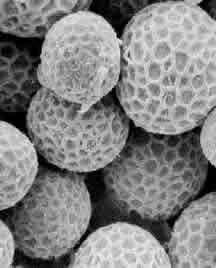 Zagworm spores:
Among the smallest
fungal spores in the
world
http://checkyourfacts.wordpress.com/2011/03/10/zagworm-the-demon-fungus/
-
Zagworm, like Ringworm, is actually a
fungal parasite
rather than an
actual worm;
the name comes from the track marks left by the fungus when
breaking down tissue which resemble the pathways of burrowing worms.
These distinctive features, but the absence of worms themselves, coupled
with the ‘possessed’ appearance of sufferers led the Motuans of Papua
New Guinea to believe that the disease was caused by a demonic parasite.
They therefore named it after the Motu word for Satan – ‘Xag’.
Transmission of the parasite is frighteningly
easy & fairly unique.
Since the spores are so small, they can essentially hitch a ride on some
larger strains of bacteria, making catching Zagworm as easy as catching
the common cold, although far more dangerous without treatment.
Once ingested the spores hatch into gametophytes & burrow into the body,
generally settling on tendons or large areas of sinew, where they grow &
break down the tissue. This erosion of tendons & sinew causes the 1st
noticeable symptom of a Zagworm infection: involuntary reflex reactions.
This rapid tensing & relaxing of the muscles (especially in the limbs) can
cause involuntary jumping or, more commonly, falling over.
At other times
the affected person can be expected to lash out or upwards with the arms & can often result in the patient punching
themselves repeatedly in the face.
The next stage of the illness usually sees the fungus spread to the
brain, causing memory loss, paranoia & delusions. If treatment isn’t
administered early at this stage then recovery is very unlikely.
In some
rare cases, where tendons are completely broken down before the
destruction of brain tissue has proved fatal, Zagworm can cause Detached
Bone Syndrome (DBS), a particularly horrific condition that can see the
body contort into painful & unnatural positions, such as joints
bending backwards or bones sliding out of position.
The trauma of
witnessing this condition in a person who is already highly mentally
unstable has been the inspiration for many posession myths, including
much of the content of the 1973 film ‘The Exorcist’.
Despite how common the parasite is, & fact that it is almost
always fatal if left undiagnosed, Zagworm can be easily and cheaply
treated with voriconazole" the
generic alternative to
Vfend (brand name) 50mg (Vorizol) or
200mg (Voritek or Vorizol). (Always safer to
titrate up SLOWLY.)
BEWARE of side effects -
http://www.rxlist.com/vfend-drug/patient-images-side-effects.htm
Also see
http://checkyourfacts.wordpress.com/category/biology/
&/or
http://www.patient.co.uk/medicine/voriconazole-for-fungal-infections
|
|
|
Wool air filters -
http://www.thehealthyhomeeconomist.com/homemade-filters-for-clean-indoor-air/
wool air filters
(Change annually/quarterly/monthly ?) |
|
|
|
Mold |
|
|
|
https://asm.org/Podcasts/MTM/Episodes/Moldy-Skin,-Invasive-Aspergillosis-and-the-Rise-of |
|
|
|
Nail Fungus |
|
|
http://fungusshield.plus/help/evidence/
This site recommends
2 oils to apply to toe nails before bedtime:
vitamin E, vitamin C. "The
study shows that AC (air conditioner) units are a hazard to human health
by decreasing the air humidity & increasing the growth of fungi. When
using the AC units & living or working in places with AC units, people are
automatically exposed to toxic fungi & spores that
may cause health issues.
Breathing air from places where AC units
exist, even though they are not functioning at the time, increase multiple health
risks." (Thus, for beginners, one
would want superior AC filters, which are changed frequently.
Same would apply
to one's vacuum cleaners: that one typically calls "heppa".
Ionizers can backfire by leaving too much ozone in the atmosphere.) |
|
|
|
|
Thymol oil -
http://well.blogs.nytimes.com/2013/04/08/ask-well-remedies-for-nail-fungus/#
-
"There is
some evidence that thymol oil, an antiseptic derived from (herb)
thyme, may help.
Proponents of thymol advocate adding the oil to regular
footbaths, or coating the affected toenail 1-2x a day with Vicks VapoRub.
The risks in this case are allergic skin reactions and temporary
reddening of the skin." |
|
|
|
Rhinitis |
|
|
Magnesium -
http://www.healthy.net/Health/Article/The_best_alternative_treatment_for_Rhinitis/6724
"Perennial
rhinitis has at least 4 main causes: *inhalant allergies, such as
house-dust,
dust mites,
moulds, animals &
feathers *food allergies or intolerance *fungal/yeast
problems *magnesium deficiency, which can worsen any of
the above causes... Foods play a large part in perennial rhinitis.
Milk sensitivity is very common & frequently described as ‘mucus-forming’,
but any food can be implicated.
Suspect a food sensitivity if you have:
no history of inhalant sensitivity & a negative response to skin inhalant
tests, a history of food cravings, abdominal distention after food, or
puffy swelling of ankles & fingers, occasional bouts of a rapid
heartbeat or sweating for no apparent reason, weight problems & sudden,
dramatic weight fluctuations from day to day.
Don’t discount alcoholic
drinks. Scotch whisky, for example, comprises wheat, corn, yeast & sugar.
If you’re sensitive to any of these, you’ll
notice an increase in rhinitis after drinking it." |
|
|
Sinus fungus -
http://www.life-worldwide.org/fungal-diseases/fungus-ball-of-the-sinus/
"Sinus aspergilloma develop in areas of functional or anatomical
abnormalities; (dental/tooth) root-filling material has been implicated in pathogenesis. Chronic sinus symptoms (purulent nasal discharge,
obstruction, facial fullness, & facial discomfort) are typical but
non-specific. Post-nasal discharge & chronic cough is an occasional
presentation."
(AVOID surgery.) |
|
|
http://www.prohealth.com/library/showarticle.cfm?libid=16885
(© 1997-2012 Dr. Joseph Mercola.
All Rights Reserved)
Sinus problems & post-nasal drip can actually be a tip-off that you're
being affected by mold or fungi.
Research done by Mayo
Clinic in 1990s strongly suggests that NEARLY ALL chronic sinusitis is
caused by fungi, but blamed on bacteria, then
mistreated using antibiotics.
(Edited)
findings were published in 1999 in 2 peer-reviewed journals,
Journal of Allergy & Clinical Immunology &
Mayo Clinic Proceedings.(1) Yet
most physicians are still unaware of this study, or at least of its
significance.
A 1999 Mayo Clinic press release(2) stated:"Mayo Clinic
researchers say they have found cause of most chronic sinus
infections - an immune response to fungus. "Mayo Clinic study
suggests 96% of people who suffer from chronic sinusitis are
"fungal sensitized," meaning they have immune responses triggered by
inhaled fungal organisms.
This explains why antibiotics are so in-effective for chronic sinusitis,
as they target bacteria, NOT fungi. Antibiotics & steroids can
actually worsen fungal-related infections by destroying body's
natural biological terrain, creating internal incubation ground for
further fungal growth…
The book,
Mold: The War Within is…a useful resource…
4. Consume organic
coconut oil rich in lauric acid, known for being antiviral, antibacterial
& antifungal.
6. Elevate your head when sleeping….
Get one's vitamin D from safe exposure of (outdoor) sun on sufficient
amounts of exposed skin (on regular basis) &/or from regular consumption
of wild/organic/cold-processed fish liver oil, such as cod.
[PS: consider using an ionizer when away from home, such as on vacation
or at work.
Likewise consider using an air purifier that uses ultraviolet light.] |
|
|
http://www.thorne.com/altmedrev/.fulltext/11/3/196.pdf
"Alternative therapeutics include nutrients &
botanicals
(ascorbic acid, bromelain, N-acetylcysteine, quercetin,
undecylenic acid, & Urtica dioica & other herbal medicines)." |
|
|
|
|
|
Interesting Editorials |
|
|
Morgellons.symptoms -
http://lymebusters.proboards.com/thread/12711 -
Curing self with
barley enzymes |
|
|
|
Jack Daniel's barrel houses are causing an out-of-control black 'whiskey
fungus' in a Tennessee community, enraged residents say (msn.com)
2/26/2023 |
|
|
|
Warning |
|
|
|
Black Face Fungus
@
https://truth11.com/2021/05/31/black-face-fungus-is-caused-by-mask-wearing-coleman/ |
|
|
Black Mold removal
http://blackmold.awardspace.com/kill-remove-mold.html -
Regarding
residential or commercial
cleaning, open windows & "never mix
ammonia with bleach because gas they create when combined is toxic. Chlorine mixed with ammonia was even used as a chemical weapon during
World War 2."
It is preferable to replace drywall [rather
than remediate drywall for purpose of containing/reducing/killing spores) |
|
|
Chlorox is a NO NO per O'Neill, Barbara
@
https://www.youtube.com/watch?v=5SjLlJtJiYc 3/19/2018
DNA & the True
Cause of Disease
@
https://www.youtube.com/@SouthamptonSDAChurch -
Chlorox kills mold
but feeds fungus: (approx. 39:45 on dial)
Instead use white vinegar +
sodium bicarbonate with a tooth or other brush.
https://en.wikipedia.org/wiki/Barbara_O'Neill +
https://www.barbhealth.com/wp-content/uploads/2014/02/Anti-Fungal-Diet-Stage-1.pdf
download pdf
https://www.barbhealth.com/wp-content/uploads/2014/02/Anti-Fungal-Diet-Stage-2.pdf
download pdf
@
https://www.barbhealth.com/articles/ @
https://www.barbhealth.com/ |
|
|
|
Dairy lactose products to AVOID/reduce (especially A-1
milk) @
What is Lactose Intolerance? | LACTAID® +
Budwig Guide - [Steer towards fermented (Candida
and Lactose Intolerance - Natural Solutions - Alternative Cancer Treatment
Clinic in Spain, Europe - Budwig Center Center) &
unpasterized & A2 dairy sources: Jersey/Guernsey cow & goats.]
Fungus/candida thrive on lactose sugars. |
|
|
|
Hair loss due to mold -
http://blackmold.awardspace.com/mold-baldness-hair-loss.html
|
|
|
|
Masks @
Pathogenic Bacteria and Fungi Found on Masks: Study (theepochtimes.com)
7/31/2022 |
|
|
|
Mold
connection to some cancers @
http://www.myhdiet.com/healthnews/mold-and-cancer-is-there-a-connection/ |
|
|
|
|
"Papaya seeds have a deworming action & contain very small quantities of a toxic substance called
carpine.
In Indonesia papaya seeds are allowed to dry, ground, mixed with water & given to livestock.
It is
not suitable for people, as
large quantities of seed
can lower pulse rate &
depress nervous system." -
http://www.prohighway.com/Article/article_show.asp?STRARTICLEID=0000001009&head=h
@
http://curezone.us/forums/am.asp?i=475212#i1
|
|
|
Papaya seeds -
http://edition.presstv.com/detail/40471.html
The unripe fruit or
seeds are sometimes used as a uterus irritant
to cause abortion. |
|
|
|
Vitamins contaminated - Solgar -
http://dgalerts.docguide.com/health-alert-network-han-fatal-gastrointestinal-mucormycosis-infant-following-ingestion-contaminated
- 11/25/2014
|
Warning on Dietary Supplements Containing
Live Bacteria or Yeast in Immunocompromised Persons -
Risk of Invasive
Fungal Disease
12/9/2014 -
A premature infant
administered a
dietary supplement,
ABC Dophilus® Powder (Solgar®), part
of in-hospital treatment, developed
gastrointestinal mucormycosis caused by
mold Rhizopus oryzae
& died.
Rhizopus oryzae mold was
found
to be present as contaminant
in an
unopened container of the ABC Dophilus
Powder,
which is formulated to contain 3
species of live bacteria.
Gastrointestinal mucormycosis primarily
occurs in immuno-compromised persons, eg. prematurely born infants. |
|
|
Waxes & Coatings @
https://organiceye.org/wp-content/uploads/2023/06/White-Paper-Edible-Waxes-and-Coatings-for-Produce-JUN2023-V12.pdf
+
https://childrenshealthdefense.org/defender/apeel-food-coating-big-ag-organic-food/
- 20230621 - |
|
|
Zonulin
-
http://www.jillcarnahan.com/2013/07/14/zonulin-leaky-gut/#
(edited)
Top Causes of Increased
Zonulin & Development of Leaky Gut:
1. Overgrowth of harmful organisms, like bacteria or yeast in the
intestine
a. SIBO = small intestinal
bacterial overgrowth
b.
Fungal
dysbiosis or candida overgrowth
c.
Parasite infections
2.
Gliadin in the diet (gluten containing foods).
Gliadin is a protein in wheat, that like gluten, is a trigger for people
with
celiac disease.
However,
a study published by Scandiavian Journal of
Gastroenterology in 2006 showed gliadin can affect
zonulin even
without gene for celiac...Researchers concluded that:
We concluded
that gliadin activates zonulin signaling
irrespective of genetic expression of autoimmunity,
leading to increased intestinal
permeability to macro-molecules...
The significance of this is that
gluten affects intestinal permeability in all persons to different
extents.
It means that 100% of those with autoimmune disease or
leaky gut may benefit from a gluten-free diet |
|
|
